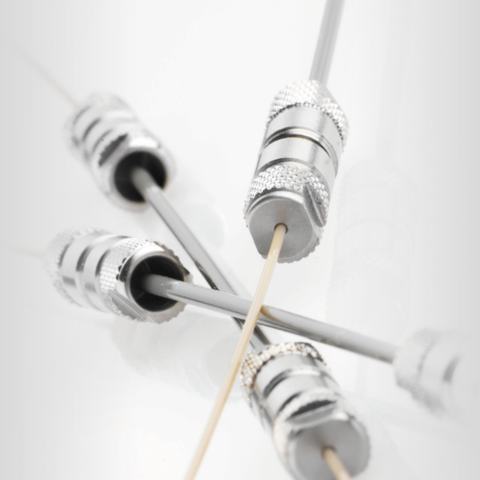
BPX - High performance/High temp
Features to look for when Purchasing a Column - Low bleed
- Maximum temperatures
- Column inertness
- Resistance to chemical degradation, air and water
- Produces needed results
SGE Stationary Phases - BP - Conventional technology
- BPX - High performance / high temperature
- HT - Very high temperature Capillary Columns
Features of BPX Columns: - BPX has the highest temperature rating on the market
- Dramatically increases the range of analysis
- Longer column lifetimes
- BETTER PERFORMANCE ms grade column for routine applications higher operating temperatures column inertness
- LONGER COLUMN LIFE lower bleed greater column inertness resistance to oxidation by air
- LOW COLUMN BLEED
- EXTENDED TEMPERATURE
- RESISTANT TO AIR OXIDATION
- CHROMATOGRAPHIC INERTNESS
BPX Chromatograms
|
Basic Rules of Column Selection - Know your components
- Use the least amount of theoretical plates as possible (uses less time)
- Know your phases: maximum temps, polarities
- Know your basic rules of chromatography
- If you have one in your cupboard - try it!
- Look at the literature
- Ask SGE
- If in doubt, use a: 30 M x 0.25 mm ID 0.25 micron BPX5
|
BPX Capillary Columns
| | BPX5 | Min: | -40°C | | Max: | 360/ 370°C | | Non-Polar | | 5% Phenyl polysilphenylene-siloxane |
| | BPX35 | Min: | 0°C | | Max: | 360/370°C | | Slightly-Polar | | 35% Phenyl polysilphenylene-siloxane |
| | BPX-VOLATILES | Min: | 0°C | | Max: | 290/300°C | | Slightly-Polar |
| | BPX50 | Min: | 40° C | | Max: | 360/370°C | | Moderately-Polar | | 50% Phenyl polysilphenylene-siloxane |
| | BPX70 | Min: | 50°C | | Max: | 260/290°C | | Polar | | 70% Cyanopropyl polysilphenylene-siloxane |
| | BPX90 | Max: | 280°C | | Polar | |
|